"Take-off" and "estimating" are often used as if they mean the same thing. They don't. They're two distinct jobs that happen to sit next to each other in the workflow — and understanding the difference makes both of them faster and more accurate. This guide draws a clean line between the two and shows how they fit together.
Two different jobs
The simplest way to hold them apart: take-off answers "how much?" and estimating answers "how much will it cost?" One produces quantities; the other applies money to them. You can have a perfect take-off with no prices, or a rough estimate with no measured quantities — but a reliable tender needs both, done in the right order.
What take-off is
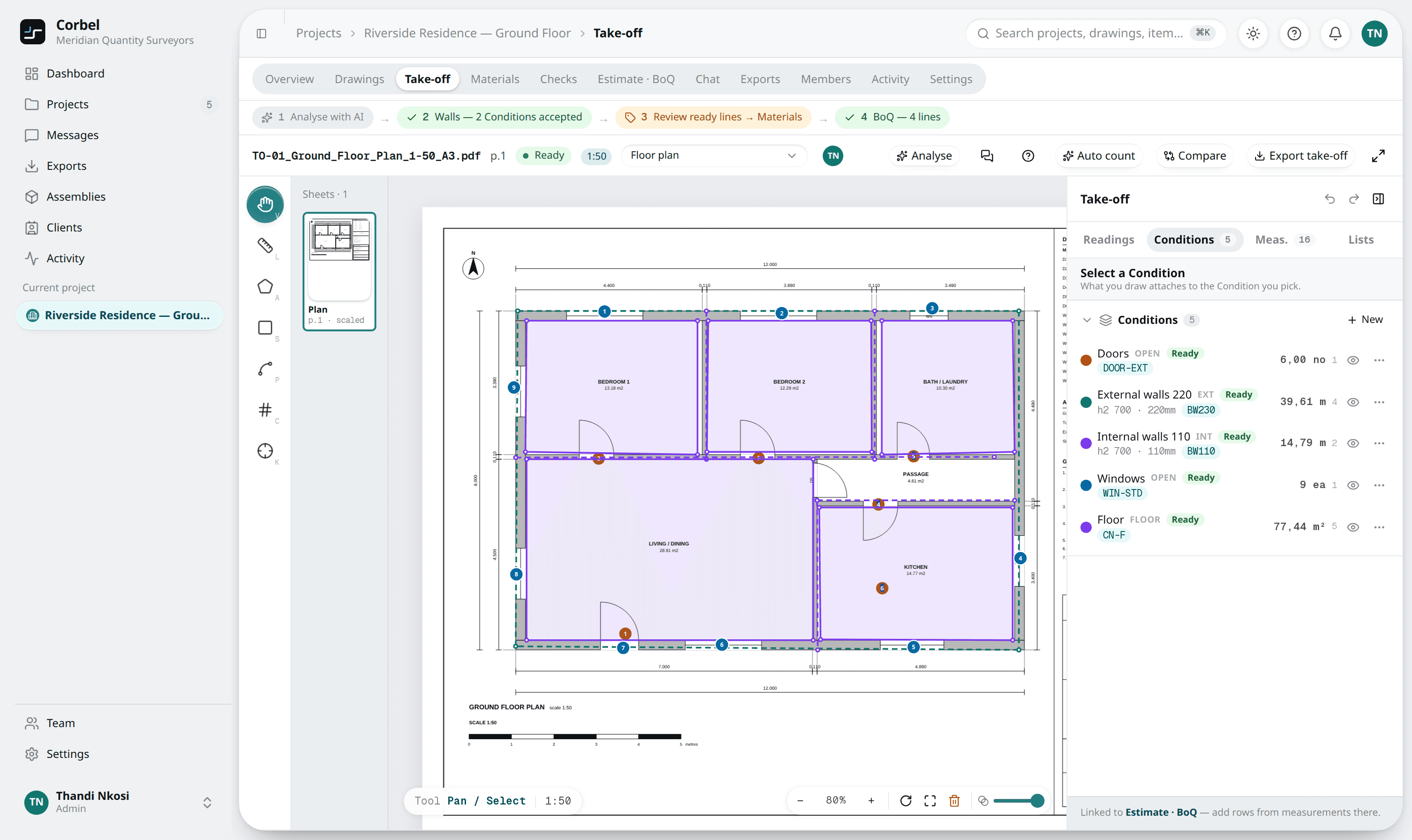
Take-off (quantity take-off) is measurement. You work from the drawings and measure the physical work: lengths of wall, areas of slab, volumes of concrete, numbers of doors. The output is a set of quantities in defined units — metres, square metres, cubic metres, number — with no pricing attached yet.
The skill in take-off is accuracy and consistency: getting the scale right, measuring to a standard method, and describing each item the same way every time so it can be priced unambiguously.
What estimating is
Estimating is pricing. You take the measured quantities and apply ratesto them — the cost per unit for labour, materials, plant and the contractor's mark-up — to arrive at a cost for each item and, ultimately, a tender total. Where take-off is about geometry, estimating is about rates, wastage, productivity and current market prices.
How they connect
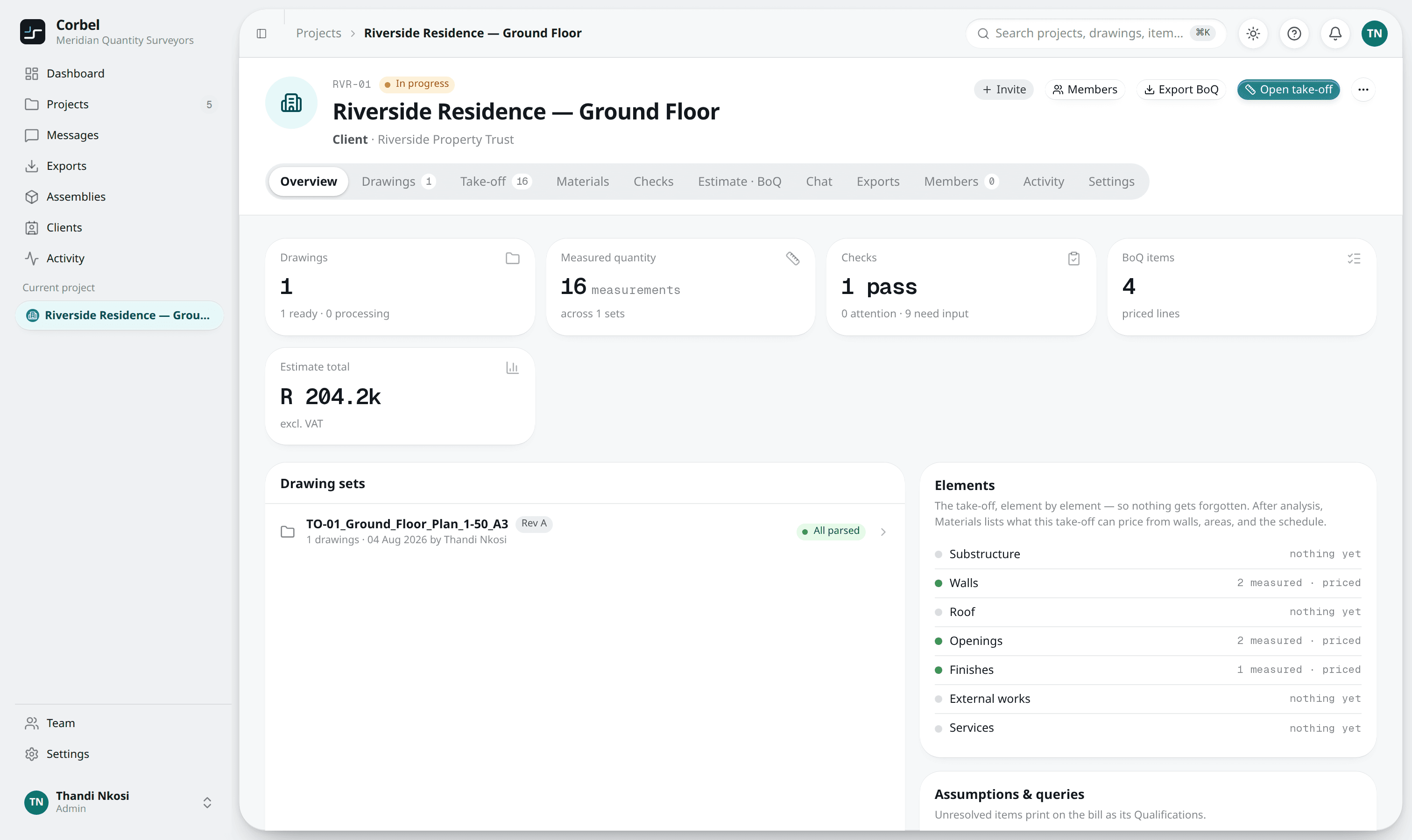
The two jobs chain together: the take-off produces the quantities, the bill of quantities structures them, and estimating puts a rate against each one. Quantity × rate, summed across every item, is the estimate. Change a quantity in the take-off and the estimate should move with it; change a rate and the total should update. When the chain is intact, the drawing, the bill and the price all stay in step.
Why doing both in one tool matters
Historically, take-off happened on a drawing board and estimating happened in a separate spreadsheet, with quantities re-keyed between them. Every hand-off is a chance to introduce error and a reason the price drifts out of sync with the drawings.
When measurement and pricing share one model — quantities land on Conditions, and those pick up recipes from your rate library — there's no re-keying. The take-off isthe estimate's source of truth. That's the core idea behind Corbel: it reads what the drawing states, you confirm it, and the quantities flow through to a priced ASAQS bill of quantities.
Ready to see the measuring half in detail? Read How to do a take-off from a PDF drawing, or get to grips with the output in The ASAQS bill of quantities, explained.